
Fly Fishing Egg Patterns: A Guide's Take
A Fly Fishing Guide’s Take on Fishing Egg Patterns
I’ve spent most of my adult life standing knee-deep in cold rivers, watching trout do exactly what nature wired them to do. As a professional fly fishing guide, I’ve learned that success often comes from understanding biology more than fly boxes. Few patterns illustrate that better than eggs. They’re controversial to some, misunderstood by many, and deadly when fished with intention.
Eggs are not a shortcut—they’re an imitation of one of the most important food sources in a trout’s ecosystem. When you understand color, seasonality, size, pattern selection, and rigging, fishing eggs becomes a refined, thoughtful approach rather than blind chuck-and-duck. Let’s break it down from a guide’s perspective.
Why Eggs Work
Eggs are a perfect meal: high in protein, low in effort. During spawning events, thousands of eggs are released into a river system. Some get knocked loose while fish dig redds, some wash out during high flows, and others drift downstream after unsuccessful fertilization. Trout, whitefish, and char have evolved to take advantage of this temporary but abundant food source.
Egg patterns work best when they reflect what’s actually happening in the river—what species are spawning, how fresh the eggs are, and how the water conditions influence fish behavior.
Egg Color: Species, Freshness, and Water Temperature
Color matters, but only when it matches reality. One of the biggest mistakes anglers make is fishing the same egg color year-round, regardless of what species are spawning.
Egg Colors by Species
Rainbow Trout Eggs
Rainbow trout eggs are typically light peach to soft pink, sometimes leaning toward pale orange. Fresh rainbow eggs have a translucent glow and are rarely overly bright. As they age, they fade toward cream or washed-out peach.
Brown Trout Eggs
Brown trout eggs are generally darker and richer in color than rainbows. Fresh eggs range from deep orange to reddish-orange. As they drift and deteriorate, they become muted apricot or pale orange-brown.
Whitefish Eggs
Whitefish eggs are smaller and much more subtle. Fresh whitefish eggs are usually pale yellow-green to light cream, almost opaque compared to trout eggs. As they age, they turn off-white or dull cream. Because whitefish often spawn in large numbers, their eggs can be a major food source, especially in winter.
Matching the species is often more important than matching the exact shade. Know what is spawning and target those colors.
Fresh Eggs vs. Dead Eggs
• Fresh eggs are brighter, translucent, and visually alive. These are best fished close to active spawning seasons or downstream of redds (never over them).
• Dead or deteriorating eggs lose color and glow. Pale, washed-out eggs are incredibly effective weeks after the spawn or in heavily pressured water.
Water Temperature and Color Choice
• Cold water: Subtle colors consistently outperform loud ones. Pale peach, cream, or light apricot are guide favorites.
• Warming water: As temperatures rise, fish become more reactive. This is when brighter oranges and pinks can shine.
• Dirty or stained water: Visibility trumps realism. Chartreuse, hot pink, or orange-red eggs help fish locate the fly—but start natural and scale up only when needed.
Seasonality: When to Fish Eggs
Fall
Brown trout and salmon spawning make fall prime egg season. Browns drop darker orange eggs, while salmon eggs are larger and often lighter orange. Fish are aggressive, but precision matters—smaller, realistic patterns excel.
Winter
Whitefish and late-spawn browns dominate many rivers. Eggs remain in the system long after spawning ends. This is when pale, small eggs absolutely shine. Winter fish won’t chase, but they rarely pass up an easy egg drifting at eye level.
Spring
Rainbow trout spawning brings egg fishing back into full force. High flows spread eggs far downstream, and fish key on them heavily. Spring and late winter is also when egg-and-worm rigs become especially effective.
Summer
Eggs take a back seat in summer, but in tailwaters or spring creeks with year-round spawning, subtle egg patterns can still fool selective trout—especially early and late in the day.
Size: Match the Real Thing
Egg size might be the most overlooked detail in egg fishing.
• Most trout eggs fall between 5–8mm
• Whitefish eggs are often smaller
• Oversized eggs may get noticed, but they don’t always get eaten—especially in clear water
As a guide, I start small almost every time. If fish won’t commit or water clarity is poor, I’ll size up slightly. Downsizing in pressured or low water conditions is often the key to success.
Remember: trout eat individual eggs, not clusters.
Types of Egg Patterns
• Yarn Eggs: Sparse yarn eggs imitate translucence well and drift naturally
• Glo-Bugs: Consistent and reliable, especially in cold water
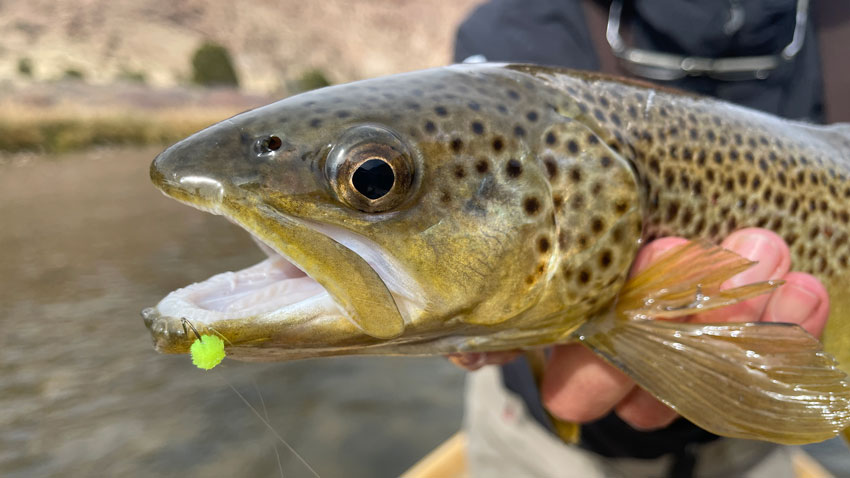
• Bead Eggs: Plastic or glass beads are among the most realistic egg imitations available
• Realistic Eggs: Ultra-detailed eggs excel in clear, pressured water
How to Rig Egg Patterns
Indicator Nymph Rig
Fish the egg as the lead fly with a nymph, midge, or worm trailing 6–14 inches behind. The egg draws attention; the dropper often gets eaten.
Double Egg Rig
Effective during peak spawn. Mix a bright egg with a pale one and let the fish decide.
Bead Rig
Peg the bead 1–2 inches above a bare hook (check regulations). This mirrors how trout naturally eat eggs.
Weighting
Use split shot to control depth instead of overly heavy flies. A natural drift is everything.
Final Thoughts from the River
Egg patterns aren’t about shortcuts—they’re about understanding the river. When you match egg color to the spawning species, adjust for water temperature, respect seasonality, size your patterns correctly, and rig them thoughtfully, eggs become one of the most honest flies you can fish.
From rainbow peach to brown trout orange to pale whitefish cream, each egg tells a story about what’s happening beneath the surface. As a guide, that story is what I’m always reading—and egg patterns are one of the clearest ways to listen.